
Potatoes are not the enemy.
A quarter pound of peeled potato (that's one serving) is only 92 calories. 3 grams of protein. 1.5 grams of fiber. Add half a teaspoon of oil and you're at about 110.
That's one side dish in a balanced thali, alongside rice, dal, and a protein.
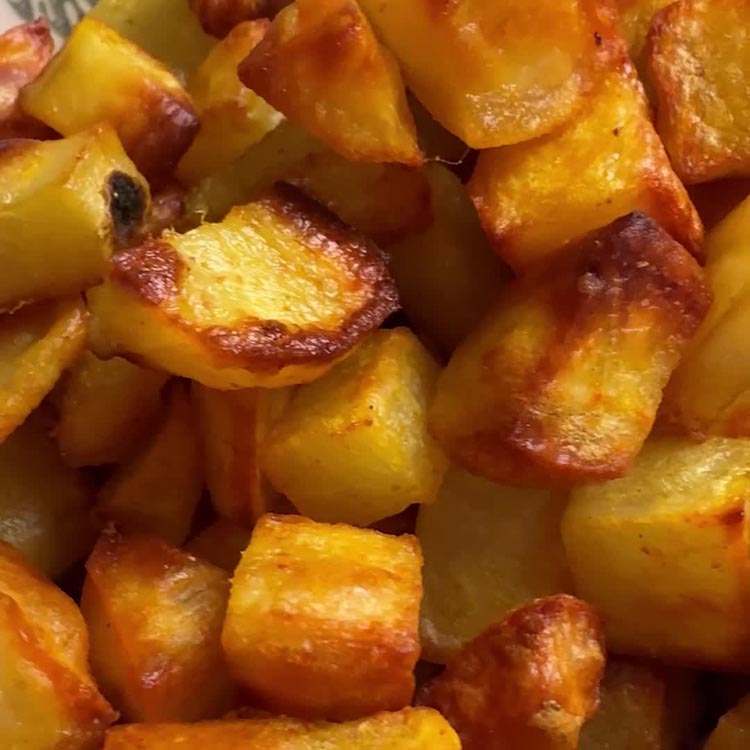
Here's what most people don't know: potatoes rank #1 on the satiety index. In a University of Sydney study, boiled potatoes scored 323%, seven times more filling than a croissant and 2.5 times more satiating than rice or pasta. They keep you full longer than almost any other food.
Stop avoiding them. Start cooking them right.
This potato nutrition guide covers macros, serving sizes, resistant starch benefits, and the best cooking methods for health and convenience.
Jump to:
- Potato Nutrition Breakdown
- Skin vs Peeled: Does It Matter?
- Resistant Starch: The Hidden Benefit
- Potato Nutrition: Serving Sizes
- Potato Nutrition: Raw vs Cooked Portions
- With Cooking Oil
- Stovetop vs Oven
- Buying and Storing Potatoes
- Potato vs Cabbage
- Potato vs Rice
- Other Ways to Cook Potatoes
- Potato in a Balanced Thali
- Oven Roasted Potatoes Recipe
- Frequently Asked Questions
- Final Thoughts
Potato Nutrition Breakdown
Here's the macro breakdown for raw russet potatoes (peeled):
| Per | Calories | Protein (g) | Fiber (g) | Fat (g) | Carbs (g) |
|---|---|---|---|---|---|
| 100g | 81 | 2.3 | 1.3 | .4 | 17.8 |
Source: USDA FoodData Central - Potatoes, russet, without skin, raw (FDC 2346401)
Skin vs Peeled: Does It Matter?
Potato nutrition changes depending on whether you eat the skin or not.
| Per 100g raw | With Skin | Peeled |
|---|---|---|
| Calories | 77 | 81 |
| Protein | 2.1g | 2.3g |
| Fiber | 2.1g | 1.3g |
| Carbs | 17.5g | 17.8g |
Key takeaways:
- Peeled potatoes are slightly higher in calories (81 vs 77 per 100g) because you're eating more concentrated starch.
- Potatoes with skin have more fiber (2.1g vs 1.3g per 100g).
- The difference is small, about 4 calories per 100g.
For this recipe, I peel the potatoes. The nutrition info reflects peeled potatoes.
Sources: FDC 2346401 (peeled) | FDC 170026 (with skin)
Resistant Starch: The Hidden Benefit
When you cook potatoes and then cool them down, some of the starch converts to resistant starch. This is a type of fiber that your body can't digest. It passes through to your gut where it feeds beneficial bacteria.
Why this matters:
- Fewer absorbable calories: Regular starch provides 4 calories per gram, but resistant starch only provides 2.5 calories per gram, about 37% less.
- Lower glycemic impact: Cooled potatoes cause a smaller blood sugar spike than freshly cooked potatoes.
- Feeds gut bacteria: Resistant starch acts as a prebiotic, supporting digestive health.
- May improve insulin sensitivity: Studies suggest resistant starch can help with blood sugar control.
- Still satiating: You get the fullness benefit of potatoes with less blood sugar impact.
Types of Resistant Starch in Potatoes
Not all resistant starch is the same. Potatoes contain multiple types:
| Type | What It Is | Found In | Survives Cooking? |
|---|---|---|---|
| Type 1 | Physically trapped starch | Raw potatoes | No, destroyed by cooking |
| Type 2 | Compact starch granules | Raw potatoes | No, gelatinized by heat |
| Type 3 | Retrograded starch | Cooked and cooled potatoes | Yes, forms after cooling, mostly survives reheating |
Type 3 is the one that matters for meal prep. When you cook potatoes and refrigerate them, the starch reorganizes into a crystalline structure that resists digestion. This is the same reason day-old rice feels firmer because the starch has retrograded.
A 2019 USDA study compared old and new fiber testing methods on potatoes. Using the newer method (AOAC 2011.25) that captures resistant starch, raw potatoes measured 15.8 g/100g of total fiber, compared to just 2.1 g/100g with the old method. That's a 13.7 g/100g difference, almost entirely from Type 1 and Type 2 resistant starch in the raw potato. But here's the key finding: baked potatoes only measured 3.2 g/100g with the new method, because cooking destroys Type 1 and 2. The resistant starch you get from meal prep (Type 3) forms after cooking and cooling.
How to get more resistant starch:
- Cook your potatoes.
- Let them cool completely (refrigerate overnight for maximum effect).
- Reheat if you want. Type 3 resistant starch mostly survives reheating.
This is why meal prepped potatoes might actually be better for you than freshly cooked ones.
Bottom line: Don't fear cold or reheated potatoes. They're not just convenient, they might be healthier.
Potato Nutrition: Serving Sizes
How much potato is one serving? It depends on how you're building your plate.
| Amount (peeled) | Serving | Calories | Protein (g) | Fiber (g) | Fat (g) | Carbs (g) |
|---|---|---|---|---|---|---|
| 100g | 100g | 81 | 2.3 | 1.3 | 0.4 | 17.8 |
| ¼ lb | 113g* | 91.5 | 2.6 | 1.5 | 0.5 | 20.1 |
| ½ lb | 227g* | 183.9 | 5.2 | 3.0 | 0.9 | 40.4 |
| 1 lb | 454g* | 367.7 | 10.4 | 5.9 | 1.8 | 80.8 |
*Serving size adjusted from original recipe
Note: You lose about 14% when peeling potatoes. Buy 530g to get 454g (1 lb) peeled.
Practical serving guidance:
¼ pound per person, the right amount when potato is one of 3-4 dishes on your plate.
½ pound per person if potato is the only vegetable on your plate.
One pound of peeled potatoes makes 4 servings.
Potato Nutrition: Raw vs Cooked Portions
Potatoes shrink when cooked. How much depends on your cooking method.
Here's how much you'll end up with from ¼ pound (113g) raw peeled:
| Method | Cooked Weight | Shrinkage |
|---|---|---|
| Stovetop | ~66g | 42% |
| Oven (45 min at 425°F) | ~70g | 38% |
My perfected recipe uses 1 lb peeled and yields ~280g cooked (4 servings of servings (70g cooked each) each).
Don't let the smaller cooked weight fool you. The calories stay the same. You're just eating a more concentrated version with crispy edges.
With Cooking Oil
Most potato recipes use some oil. Here's what that adds:
| Oil Amount | Calories Added | Total (¼ lb peeled potato) |
|---|---|---|
| ½ teaspoon (2.5g) | 22 | ~114 calories |
| 1 teaspoon (5g) | 44 | ~136 calories |
For the oven roasted potatoes recipe, I use ½ teaspoon of oil per quarter pound serving. That keeps the total around 110 per serving.
Stovetop vs Oven
I tested both methods. Here's the breakdown:
| Factor | Stovetop | Oven |
|---|---|---|
| Active cooking time | 10 minutes | 1 minute |
| Total time | ~25 minutes | ~55 minutes |
| Attention needed | Constant stirring | Set and forget |
| Texture | Risk of burning | Perfectly golden brown |
The verdict: Oven wins. You get golden brown potatoes every time, and you don't have to stand there stirring. Just toss, spread on a sheet, and walk away.
Cost breakdown (including time):
Potatoes cost $0.79/lb. Factor in 15% loss from peeling and 10 minutes of prep:
- Potato + prep time: $3.43/lb
- Stovetop cooking time: adds $2.50 → Total: $5.93/lb
- Oven cooking time: adds $0.25 → Total: $3.68/lb
Here's what happened when I tested:
- Stovetop? I burned it.
- Oven? Perfectly golden brown.
Oven is cheaper and actually tastes good.
Buying and Storing Potatoes
What to look for: Firm potatoes with smooth skin, no sprouts or green spots. Medium sizes cook more evenly. Avoid green patches (bitter taste and digestive issues from solanine).
Where to buy: Available at every grocery store year round. Price: ~$0.79/lb. Russet or yellow potatoes work great for Indian-style cooking.
How to store:
- Whole potatoes: Cool, dark, dry place (not the refrigerator). Keeps 2 to 3 weeks.
- Cut potatoes: Submerged in cold water in the fridge. Use within 24 hours.
- Don't store with onions (they make each other spoil faster).
If potatoes start sprouting, cut off the sprouts. The rest is still safe to eat if firm.
Can You Freeze Cooked Potato Fry?
I tested it.
Made a batch. Froze half. Reheated in the microwave.
Result? Okay but a bit rubbery.
This one's a maybe for now.
Frozen hashbrowns exist. Frozen fries exist. So this should work with some adjustments.
Currently testing again with undercooking before freezing. I'll update this section with what I find.
Tip: If you want to meal prep potatoes, refrigerating for 3-4 days works better than freezing.
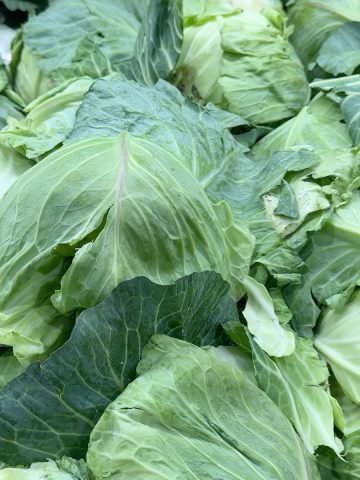
Potato vs Cabbage
How does potato compare to another popular vegetable? Here's a side by side look at the raw nutrition:
| Ingredient | Serving | Calories | Protein (g) | Fiber (g) | Fat (g) | Carbs (g) |
|---|---|---|---|---|---|---|
| Potato (peeled) | 100g | 81 | 2.3 | 1.3 | 0.4 | 17.8 |
| Cabbage | 100g | 28 | 1.0 | 2.5 | 0.2 | 6.4 |
Key differences:
- Cabbage is much lower in calories (28 vs 81 per 100g).
- Potato has more protein and carbs.
- Cabbage has more fiber (2.5g vs 1.3g per 100g).
- Potato is more satiating (keeps you fuller longer).
- Cabbage is cheaper ($0.49 vs $0.79/lb).
- Both work great in the oven.
For volume eating, cabbage wins on calories. For satiety, potato wins.
For more on cabbage, see the Cabbage Nutrition Guide.
Potato vs Rice
This is a common question: are potatoes healthier than rice?
| Per Serving | Serving | Calories | Protein (g) | Fiber (g) | Fat (g) | Carbs (g) |
|---|---|---|---|---|---|---|
| White Rice (1 serving) | 31g* | 110.4 | 2.1 | 0 | 0 | 24.8 |
| Potato (¼ lb) | 113g* | 91.5 | 2.6 | 1.5 | 0.5 | 20.1 |
| Potato (½ lb) | 227g* | 183.9 | 5.2 | 3.0 | 0.9 | 40.4 |
*Serving size adjusted from original recipe
Rice serving: 220g raw (1 cup) split into 7 servings = 31g raw per serving → ~100g cooked.
Key differences:
- A ¼ lb potato serving has fewer calories than 1 serving of rice (92 vs 112).
- Potatoes have more fiber (especially when cooled for resistant starch).
- Potatoes are 2.3x more filling based on satiety research (323% vs 138% on satiety index).
- Similar protein per serving.
Both are healthy carb sources. For weight management, potatoes may help more with hunger control.
Other Ways to Cook Potatoes
Potato fry is popular, but this vegetable is versatile:
- Aloo fry/bhaji: South Indian style with mustard seeds and curry leaves.
- Jeera aloo: North Indian style with cumin.
- Aloo gobi: Combined with cauliflower.
- Roasted potatoes: Crispy oven-roasted with herbs.
- Mashed potatoes: Creamy comfort food.
- Potato curry: Saucy and spiced.
Potato in a Balanced Thali
Here's how potato fry fits into a complete meal:
| Recipe Name | Serving Size | Calories | Protein (g) | Fiber (g) | Fat (g) | Carbs (g) |
|---|---|---|---|---|---|---|
| White Rice (Stovetop Method) | 1 bowl (100g) | 112 | 2 | 0 | 0 | 25 |
| Tomato Pappu | 1 cup (~110 g of cooked dal) | 154 | 7 | 3 | 3 | 26 |
| Oven Roasted Potatoes | 1 servings (70g cooked) | 110 | 3 | 2 | 3 | 20 |
| Oven Baked Chicken Thighs | Indian Style | 1 bowl (~100g) | 196 | 25 | 2 | 8 | 7 |
| Total | - | 572 | 37 | 7 | 14 | 78 |
A sample thali might include: white rice, dal, oven roasted potatoes, and a protein of choice.
Portion guidance:
¼ lb potato per person, the right amount alongside rice, dal, and a protein.
½ lb potato per person if it's the only vegetable on your plate.
One pound of peeled potatoes makes 4 servings.
Oven Roasted Potatoes Recipe
Ready to cook potatoes the easy way? 10 minutes of prep, 45 minutes in the oven. Peel, dice, toss with oil, turmeric, chili powder, and salt. Spread on a baking sheet. Roast at 425°F for 45 minutes . Flip halfway.
Golden brown every time. No stirring. No burning. No parboiling needed.
The published recipe makes 4 servings at 110 each (servings (70g cooked each) per serving). Develops resistant starch when cooled, perfect for meal prep.
Get the full Oven Roasted Potatoes recipe with nutrition info →
Frequently Asked Questions
Yes. Potatoes are nutrient-dense with protein, fiber, potassium, and vitamin C. The problem is usually what we add to them (butter, sour cream, deep frying) and what you eat with it.
Potatoes are one of the most satiating foods, meaning they keep you full longer than most carbs. This can help with weight loss by reducing overall hunger. Just watch your portions and cooking method.
No. Half a pound of peeled potato has about 40 grams of carbs. If you're doing low carb or keto, potatoes aren't the best choice. For everyone else, they're a healthy carb source.
Both are healthy carb sources. A ¼ lb potato serving (92 cal) has fewer calories than a typical rice serving (112 cal), more fiber, and ranks 2.3x higher on the satiety index. For weight management, potatoes may help more with hunger control.
Potatoes have a lot of starch, which can stick and burn if you don't stir constantly. The oven method solves this. Spread them out, flip once, and get golden brown results without burning.
Cooked potatoes keep for 3-4 days in an airtight container in the refrigerator. They reheat well in the microwave or oven.
Oven. Better texture (golden brown edges), less active time, half the cost when you factor in your time, and no risk of burning. Stovetop works if you prefer it, but oven is my winner.
Final Thoughts
Here's what to remember:
- 92 calories per quarter pound (about 110 with oil).
- #1 on the satiety index. Keeps you fuller than rice, pasta, or bread.
- The right side dish for a thali. Fits alongside rice, dal, and a protein.
- Cool them for bonus benefits. Resistant starch means fewer absorbed calories and better gut health.
- Oven beats stovetop. Hands off, no burning, golden brown every time.
Meal prep a batch on Sunday. Refrigerate. Reheat throughout the week. You get convenience and the resistant starch benefit.
Nutrition data sourced from USDA FoodData Central.
Leave a Reply