
Okra nutrition makes it one of the best vegetable sides for balanced thalis. At just 33cal calories per 100g with 3g fiber and 2g protein, it adds volume and nutrition without weighing down your plate.
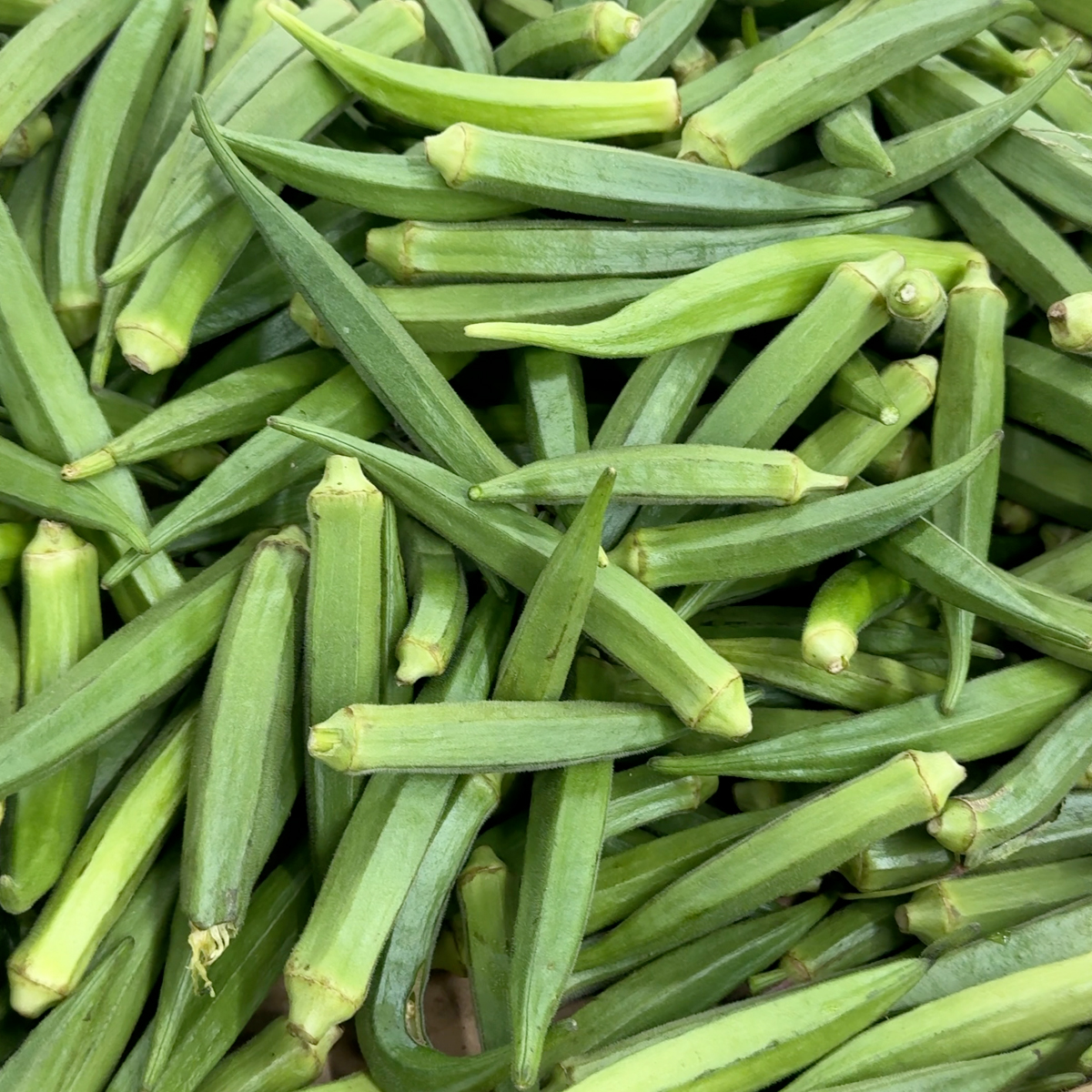
This guide covers everything you need to know: nutrition facts, raw vs cooked portions, fresh vs frozen cost comparison, and two cooking methods so you can make okra a regular part of your balanced meals.
Jump to:
- What Is Okra?
- Okra Nutrition Breakdown
- Okra Nutrition: Raw vs Cooked Portions
- Fresh vs Frozen Okra
- How to Buy and Store Okra
- The Slime Factor: How to Minimize It
- Ways to Cook Okra
- 5 Baked Okra Fry Recipes
- Substitutions
- Tips for Perfect Okra
- Okra Nutrition in a Balanced Thali
- Frequently Asked Questions
- Final Thoughts
What Is Okra?
Okra is a green pod vegetable popular across Indian cuisines. You'll find it in North Indian bhindi masala, South Indian stir fries, and even added to sambar.
Other Names You Might See
Bhindi (Hindi), Bendakaya (Telugu), Vendakkai (Tamil), Lady's Finger (British English). If you see any of these at your local grocery store or Indian market, it's the same vegetable.
Okra Nutrition Breakdown
| Per | Calories | Protein (g) | Fiber (g) | Fat (g) | Carbs (g) |
|---|---|---|---|---|---|
| 100g | 33 | 2 | 3 | 0.19 | 8 |
Cooking Info
| Detail | Stovetop | Oven |
|---|---|---|
| Raw Measure | 1 lb (454g) | 1 lb (454g) |
| Cooked Yield | 184g | 100g |
| Serving Size | 92g | 50g |
Okra stands out among vegetables because it has both fiber and protein. Most veggies have fiber but negligible protein, making okra especially useful for building balanced thalis.
Okra Nutrition: Raw vs Cooked Portions
This is where meal planning gets tricky. Okra shrinks significantly when cooked, and the amount depends on your cooking method. Understanding okra nutrition per serving helps you plan accurately.
Here's the math:
Stovetop method: 1 lb raw okra (454g) yields 186g cooked. Serving size is 92g, so 1 lb makes 2 servings.
Oven method: 1 lb raw okra (454g) yields 100g cooked. Serving size is 50g, so 1 lb also makes 2 servings.
The oven method loses more moisture, giving you crispier okra but smaller portions by weight. Both methods give you roughly 2 servings per pound.
With oil added: Most okra recipes use about 2 teaspoon oil for 1 lb okra. This adds 70 calories total, or about 35 calories per serving.
Fresh vs Frozen Okra
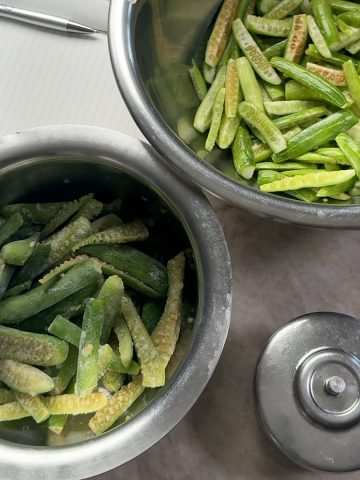
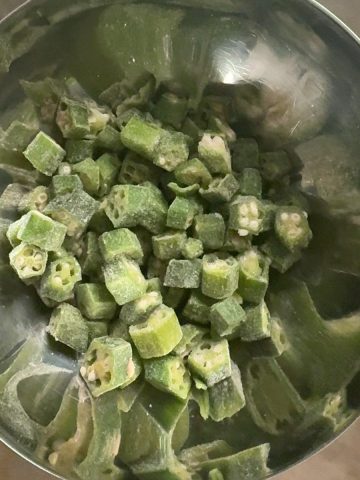
Frozen okra is my go-to. It's pre-cut, ready to cook, and you don't have to worry about whether the store has good quality okra that day. No picking through pods, no prep time, no waste.
Fresh Okra
1 lb costs around $2.75. After removing ends, you get about 381g usable okra (84% yield). To get 1 lb of prepped okra, you need to buy extra to account for waste. Prep time for picking, washing, drying, and cutting takes about 9 minutes.
Frozen Okra
Pre-cut and ready to cook. Sale price runs around $2.56 per lb equivalent. Regular price runs around $4.54 per lb equivalent. No prep time needed.
Total Cost Comparison (Including Your Time)
| Type | Stovetop | Oven |
|---|---|---|
| Fresh | $9.28 | $6.78 |
| Frozen | $6.31 | $3.81 |
When you factor in your time, frozen almost always wins. See my fresh vs frozen okra cost calculator to find out exactly how much you save.
How to Buy and Store Okra
What to look for: Firm pods that snap when bent, bright green color, no dark spots or soft areas. Smaller pods (2 to 3 inches) are more tender and less slimy than large ones.
Storage
Don't wash until ready to use because moisture speeds up spoilage. Store in a paper bag or wrapped in paper towel inside a plastic bag. Refrigerator life is 3 to 4 days. To freeze fresh okra, wash, dry completely, slice, and freeze on a baking sheet before transferring to bags.
The Slime Factor: How to Minimize It
Okra's reputation for sliminess keeps many people from cooking it. The slime (mucilage) releases when okra is cut and exposed to moisture or low heat. Here's how to minimize it:
Dry thoroughly before cutting. After washing, pat completely dry or let air dry for 10 to 15 minutes.
Use high heat. Hot oil or a hot oven helps the okra cook quickly before the slime can develop.
Don't overcrowd the pan. Crowding creates steam, which releases more mucilage.
Add acid. Tomatoes, tamarind, or lemon juice help reduce sliminess in curries.
Cook uncovered. Covering traps steam and makes okra slimy.
Choose smaller pods. They have less mucilage than large, mature ones.
Ways to Cook Okra
Stovetop Stir Fry (Bhindi Fry)
The most common method for everyday cooking. High heat in a wide pan with oil gives you slightly crispy edges with tender centers.
Cooking time is about 15 minutes active cooking. Best for traditional bhindi fry and quick weeknight sides. Use about 1 teaspoon oil per serving. Yield is 1 lb raw to 186g cooked (2 servings of 92g each).
Oven Method
Uses less oil and requires less active attention. The okra gets crispier but shrinks more.
Cooking time is about 5 minutes active prep, then hands off oven time. Best for crispy okra, when you want less oil, or batch cooking. Yield is 1 lb raw to 100g cooked (2 servings of 50g each).
5 Baked Okra Fry Recipes
One base technique, five different flavors. All use frozen okra baked at high heat for zero slime and maximum crispiness.
- Baked Frozen Okra - The base recipe. Four ingredients, one sheet pan.
- Frozen Okra with Onions - Caramelized onions add natural sweetness.
- Okra with Garlic Podi - South Indian style with just 3 ingredients.
- Baked Besan Okra - Kurkuri bhindi crunch without deep frying.
- Yogurt Okra - Hot crispy okra meets cool tangy yogurt.
| Okra Recipe | Serving | Calories | Protein (g) | Fiber (g) | Fat (g) | Carbs (g) |
|---|---|---|---|---|---|---|
| Baked Frozen Okra | 1 serving (100g) | 112 | 5 | 7 | 4 | 18 |
| Frozen Okra with Onions | 1 serving (135g) | 163 | 6 | 8 | 8 | 22 |
| Okra with Garlic Podi | 1 serving (107g) | 168 | 6 | 9 | 8 | 22 |
| Baked Besan Okra | 1 serving (150g) | 200 | 10 | 10 | 6 | 32 |
| Yogurt Okra (Dahi Bhindi) | 1 serving (178g) | 194 | 10 | 8 | 8 | 26 |
See my full baked okra recipes roundup for detailed comparisons and which one to make first.
Substitutions
For stir fries: Green beans or zucchini work as veggie sides but have a different texture.
For curries: Drumstick (moringa pods) gives a similar pod vegetable feel in South Indian dishes.
For fiber: Broccoli or green beans add similar fiber, though neither matches okra's protein content.
For balanced thalis, okra is hard to replace because of its unique fiber plus protein combination.
Tips for Perfect Okra
Wash and dry okra at least 30 minutes before cutting, or use a clean kitchen towel to dry each pod.
Cut off just the stem end. Don't cut into the pod itself or you'll release slime before cooking.
Preheat your pan or oven fully before adding okra.
Don't stir too frequently. Let the okra get some color before moving it.
Season with salt only after cooking starts, as salt draws out moisture.
Add a squeeze of lemon at the end for brightness.
Okra Nutrition in a Balanced Thali
A single serving of okra (92g cooked, stovetop method with oil) adds 75cal calories, 2g protein, and 3g fiber to your thali. That's a significant protein and fiber boost from a vegetable side.
I typically pair okra with a dal or curry for additional protein, rice or roti as the starch, and a raita or chutney for probiotics and flavor.
Example Balanced Thali with Okra
Bhindi Fry + Tomato Pappu + White Rice + Cucumber Raita
| Recipe Name | Serving Size | Calories | Protein (g) | Fiber (g) | Fat (g) | Carbs (g) |
|---|---|---|---|---|---|---|
| Tomato Pappu | 1 cup (~110 g of cooked dal) | 154 | 7 | 3 | 3 | 26 |
| White Rice (Rice Cooker Method) | 1 bowl (100g Cooked Rice) | 112 | 2 | 0 | 0 | 25 |
| Cucumber Raita | 1 bowl | 85 | 4 | 1 | 4 | 8 |
| Total | - | 351 | 13 | 4 | 7 | 59 |
Note: Okra fry nutrition will be added once the recipe is published.
This combination gives you protein from both the dal and the okra, plus fiber from multiple sources. It builds a balanced meal without adding meat if you prefer vegetarian options.
Frequently Asked Questions
Yes, okra has 2g protein per 100g. This is higher than most vegetables, making okra a good plant-based protein source for balanced thalis.
Raw okra has 33 calories per 100g. Cooked okra with oil will have slightly more depending on your cooking method.
Yes, okra has 3g fiber per 100g, which is considered high for a vegetable. This makes it a good choice for adding fiber to your meals.
A typical serving size is 92g cooked okra (stovetop method) or 50g (oven method). One pound (454g) of raw okra makes about 2 servings.
Bhindi is called okra in English. It's also known as lady's finger, bendakaya (Telugu), and vendakkai (Tamil).
No, okra is low in carbohydrates with only 8g carbs per 100g. It's a good vegetable choice for low-carb eating.
Final Thoughts
Do you prefer your okra crispy or in a curry? And are you team fresh or team frozen? Let me know in the comments!
Curries & Dals Recipes:


Leave a Reply