
Green bell peppers give you a lot of food for very few calories. Nearly double the Vitamin C of an orange, and half a pound (227g) is only 45 calories.
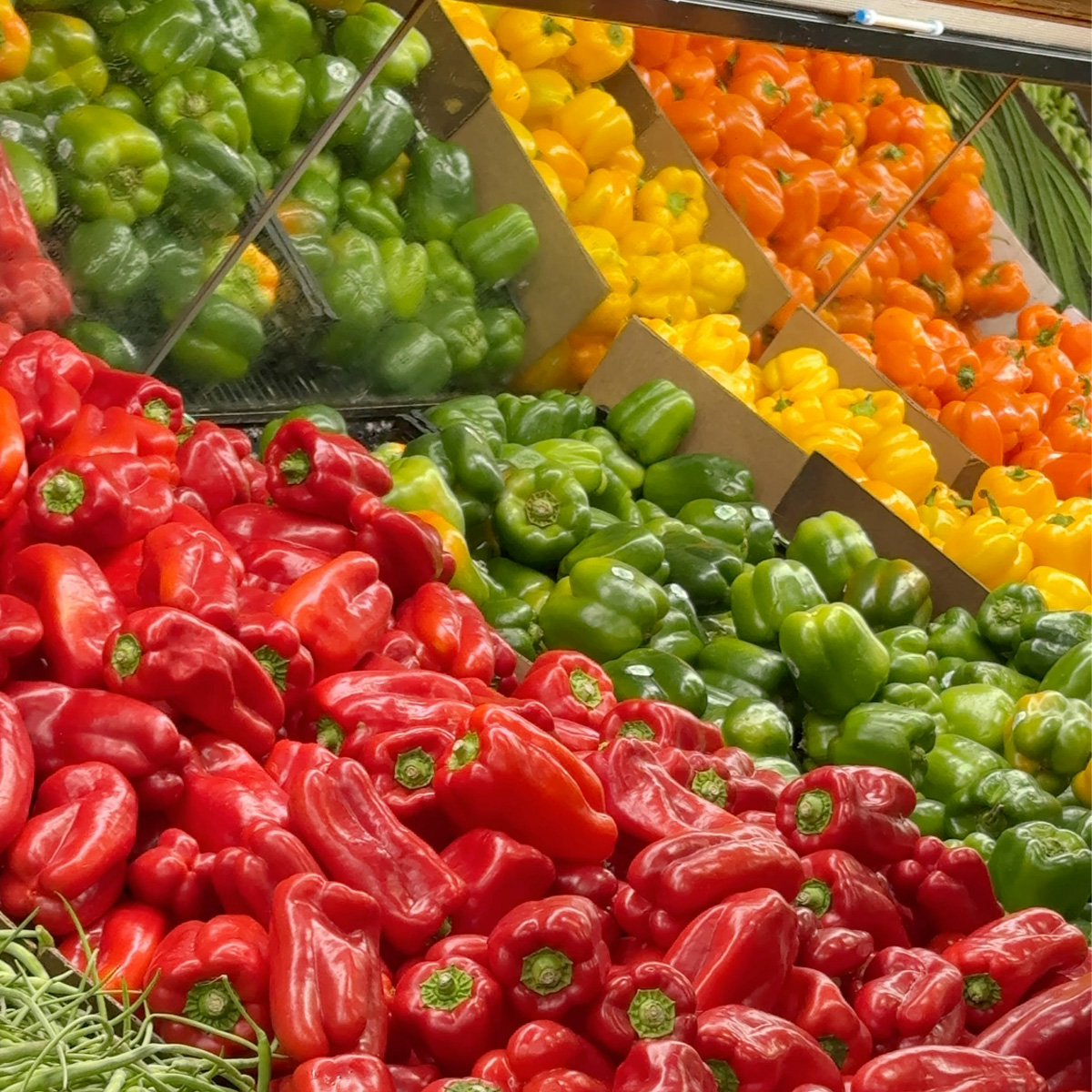
You might see them called green peppers, bell peppers, or capsicum (that's what they're called in India). Same vegetable. This guide covers the full nutrition breakdown, serving sizes, how much green peppers shrink after roasting, and how they compare to red peppers and cauliflower.
Jump to:
- Nutrition at a Glance
- Vitamin C: The Star Nutrient
- Serving Sizes
- Raw vs Cooked Green Pepper Portions
- With Cooking Oil
- Stovetop vs Oven
- How to Select Green Bell Peppers
- Where to Buy
- How to Store Green Bell Peppers
- Green Pepper vs Red Pepper
- Green Pepper vs Cauliflower
- Other Ways to Cook Green Bell Peppers
- Green Bell Pepper in a Balanced Thali
- Try My Oven Roasted Pepper Fry
- Frequently Asked Questions
- Final Thoughts
Nutrition at a Glance
Here's the full macro breakdown for raw green bell pepper:
| Per | Calories | Protein (g) | Fiber (g) | Fat (g) | Carbs (g) |
|---|---|---|---|---|---|
| 100g | 20 | 0.72 | 0.9 | 0.11 | 4.78 |
At 20 calories per 100 grams, green bell peppers are one of the lowest calorie vegetables you can buy. They're mostly water (94%) with a small amount of carbs and almost no fat.
Source: USDA FoodData Central (FDC 2258588)
Vitamin C: The Star Nutrient
Green bell peppers have 99.5mg of Vitamin C per 100 grams. That's 110% of your Daily Value in just 100g of raw pepper.
To put that in perspective, oranges have 53mg per 100g. Green peppers have nearly double.
Why does this matter? Vitamin C supports iron absorption, which is especially important if you're eating plant based meals. Pair green peppers with dal or spinach and you'll absorb more iron from those foods.
One thing to know: heat reduces Vitamin C. Raw green peppers give you the most. Oven roasting at 425°F still retains a good portion, but if you want to maximize it, eat them raw as a snack or add them to salads.
Serving Sizes
How much green pepper is one serving? It depends on how you're building your plate.
| Amount | Serving | Calories | Protein (g) | Fiber (g) | Fat (g) | Carbs (g) |
|---|---|---|---|---|---|---|
| 100g | 100g | 20 | 0.7 | 0.9 | 0.1 | 4.8 |
| ¼ lb | 114g* | 22.8 | 0.8 | 1.0 | 0.1 | 5.4 |
| ½ lb | 227g* | 45.4 | 1.6 | 2.0 | 0.2 | 10.9 |
| 1 lb | 454g* | 90.8 | 3.3 | 4.1 | 0.5 | 21.7 |
*Serving size adjusted from original recipe
Practical serving guidance:
- ½ pound per person if green pepper is your main vegetable
- ¼ pound per person if you have multiple sides
One pound of raw green peppers makes 2 generous servings or 4 lighter sides.
Note on prep waste: Green peppers have about 14% wastage from seeds, stems, and membranes. To get 1 pound of prepared pepper, start with about 1 pound 3 ounces (528g) from the store.
Raw vs Cooked Green Pepper Portions
Green peppers lose water when roasted. The calories stay the same, just concentrated into a smaller portion.
I oven roasted a batch of peppers at 425°F for 45 minutes and weighed them before and after. Result: 72% weight retention.
| Raw Amount (prepared) | Cooked Weight | Calories |
|---|---|---|
| ¼ lb (114g) | ~82g | 23 |
| ½ lb (227g) | ~165g | 45 |
| 1 lb (454g) | ~330g | 91 |
Note: These numbers are from a mixed pepper experiment (50/50 green and red). Green peppers have slightly more water (94% vs 92%), so actual retention may be slightly lower. Close enough for meal planning.
With Cooking Oil
Green peppers on their own are almost calorie free. Oil is where the real calories come from. Here's exactly how much each amount adds:
| Oil Amount | Calories Added | Total (½ lb raw) |
|---|---|---|
| None | 0 | 45 cal |
| 1 teaspoon (5g) | 40 | 85 cal |
| 2 teaspoon (10g) | 80 | 125 cal |
| 1 tablespoon (14g) | 120 | 165 cal |
My oven roasted pepper fry uses 1 teaspoon of oil per half pound. That keeps a serving at about 85 calories. Still very low for a full plate of food.
Stovetop vs Oven
Both methods work. But they're not the same.
| Factor | Stovetop | Oven |
|---|---|---|
| Prep time | 10 to 15 minutes | 10 to 15 minutes |
| Active cooking time | 10 to 15 minutes | None (hands off) |
| Total time | 20 to 30 minutes | 55 to 60 minutes |
| Attention needed | Constant stirring | Set and forget |
| Oil needed | More (to prevent sticking) | Less (1 teaspoon per half pound) |
| Texture | Softer, uneven char | Consistent roast, slight char |
| Best for | Quick weeknight cooking | Meal prep, batch cooking |
Peppers take more prep than some vegetables. You need to cut off the stems, scoop out the seeds and membranes, and slice them. That's about 10 to 15 minutes of hands on work regardless of cooking method.
The verdict: I meal prep peppers every week using the oven method. Same prep time either way, but with the oven you walk away after that. The oven does the work while you make dal or rice.
How to Select Green Bell Peppers
When buying green bell peppers, look for:
- Color: Bright, even green. No yellowing (that means it's starting to ripen into red).
- Skin: Firm, glossy, and smooth. No wrinkles or soft spots.
- Weight: Heavy for its size. Heavier peppers have thicker walls and more edible flesh.
- Stem: Green and fresh, not dried out or brown.
- Shape: Symmetrical with 3 to 4 lobes. Easier to cut and less waste.
Avoid peppers that feel light, look dull, or have soft spots near the stem. Those are past their prime.
Where to Buy
Green bell peppers are available year round at every grocery store. They're the cheapest of all bell pepper colors, typically $1 to $2 per pound. Red, yellow, and orange peppers cost 2 to 3 times more because they take longer to ripen.
At Indian grocery stores, you'll find them labeled as capsicum. Same vegetable, same nutrition.
Fresh vs frozen: Frozen bell pepper strips aren't common at every store, but if you find them, skip the thawing. Toss them directly with oil and spices and roast from frozen.
No significant nutrition difference between organic and conventional.
How to Store Green Bell Peppers
Whole peppers: Store unwashed in the crisper drawer. They'll keep for 1 to 2 weeks.
Cut peppers: Place in an airtight container or zip lock bag. Use within 3 to 5 days. Don't wash before storing, moisture speeds up spoilage.
Raw peppers: You can freeze them. Cut into strips or dice, spread on a baking sheet to freeze individually, then transfer to a freezer bag. They'll keep for 6 months but the texture will be softer after thawing (best for cooking, not raw eating).
Can You Freeze Cooked Green Pepper Fry?
Yes. Oven roasted pepper fry freezes well for 2 to 3 months.
Portion into individual meal prep containers right after cooking. Let them cool completely before freezing. Reheat in the microwave or pop them back in the oven at 350°F for 10 minutes.
The texture softens slightly after freezing. When you microwave, the peppers release a bit of moisture. Not a big deal. It actually mixes well into the other items on your plate and works as a flavor booster for rice and dal.
Green Pepper vs Red Pepper
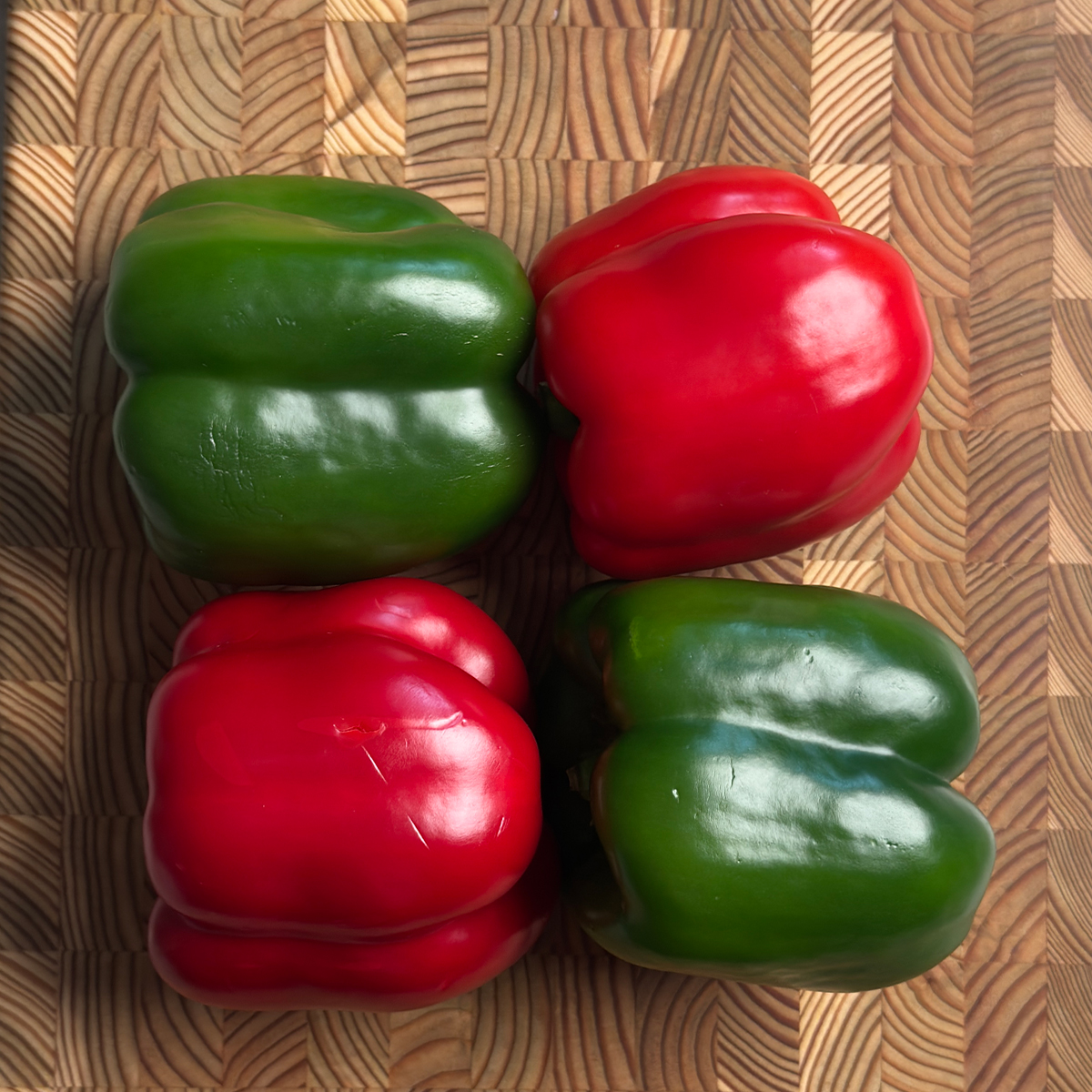
Green and red bell peppers are the same plant. Green is just picked earlier, before it ripens to red. That difference in ripeness changes the nutrition.
| Ingredient | Serving | Calories | Protein (g) | Fiber (g) | Fat (g) | Carbs (g) |
|---|---|---|---|---|---|---|
| Green Bell Pepper | 100g | 20 | 0.7 | 0.9 | 0.1 | 4.8 |
| Red Bell Pepper | 100g | 27 | 0.9 | 1.2 | 0.1 | 6.7 |
Key differences:
- Red has 35% more calories (27 vs 20 per 100g)
- Red has 43% more Vitamin C (142mg vs 99.5mg)
- Red has 114% more folate (47µg vs 22µg)
- Green has fewer carbs (4.78g vs 6.65g)
- Green is cheaper ($1 to $2/lb vs $3 to $4/lb)
- Red tastes sweeter, green tastes slightly bitter
When to choose which: If you want the lowest calorie, lowest carb option for high volume meals, go with green. If you want more nutrients per bite and don't mind the extra cost, go with red. Both are excellent choices.
For more on red bell pepper nutrition, see the comparison data sourced from USDA FDC 2258590.
Green Pepper vs Cauliflower
Two of the most popular low calorie vegetables for meal prep. Here's how they compare:
| Ingredient | Serving | Calories | Protein (g) | Fiber (g) | Fat (g) | Carbs (g) |
|---|---|---|---|---|---|---|
| Green Bell Pepper | 100g | 20 | 0.7 | 0.9 | 0.1 | 4.8 |
| Cauliflower | 100g | 28 | 1.6 | 1.9 | 0.2 | 4.7 |
Key differences:
- Green pepper: 20 calories per 100g vs cauliflower: 28 calories
- Green pepper wins on Vitamin C: 99.5mg vs 67.1mg
- Cauliflower wins on calcium: 20mg vs 7mg
- Cauliflower wins on potassium: 274mg vs 163mg
- Cauliflower wins on folate: 97µg vs 22µg
I rotate between both in my meal prep. Green pepper adds color and Vitamin C. Cauliflower adds minerals and works as a rice substitute.
Other Ways to Cook Green Bell Peppers
Oven roasted fry is my go to, but green peppers are versatile:
- Stuffed peppers: Fill halved peppers with rice, dal, keema or paneer mixture and bake
- Stir fry with paneer: Indo-Chinese style capsicum and paneer in soy sauce
- Raw with hummus: Sliced into strips as a snack or appetizer
- Added to sambar or curry: Diced into South Indian sambar or mixed vegetable curry
- Air fryer: 400°F for 10 to 12 minutes, similar results to oven with less time
- Grilled on skewers: Cut into chunks, skewer with onions, grill until charred
Green peppers hold their shape well in all of these methods, raw or cooked.
Green Bell Pepper in a Balanced Thali
Here's how oven roasted green pepper fry fits into a complete Indian meal:
| Recipe Name | Serving Size | Calories | Protein (g) | Fiber (g) | Fat (g) | Carbs (g) |
|---|---|---|---|---|---|---|
| White Rice (Pressure Cooker Method) | 1 bowl (100g) | 112 | 2 | 0 | 0 | 25 |
| Tomato Pappu | 1 cup (~110 g of cooked dal) | 154 | 7 | 3 | 3 | 26 |
| Oven Roasted Bell Peppers | 1 serving (180g cooked each) | 78 | 2 | 2 | 5 | 9 |
| Oven Baked Chicken Thighs | Indian Style | 1 bowl (~100g) | 196 | 25 | 2 | 8 | 7 |
| Total | - | 540 | 36 | 7 | 16 | 67 |
A balanced thali with green pepper fry might include:
- White rice (1 serving, 112 cal)
- Dal (1 serving, 112 cal)
- Oven roasted pepper fry (½ lb serving, 78 cal)
- Oven baked chicken thighs (1 serving, 196 cal)
The thali nutrition table above shows exact per serving calories. Adjust portions based on your calorie target. The pepper fry is the lowest calorie item on the plate, so you can be generous with it.
Try My Oven Roasted Pepper Fry
Ready to put this nutrition data into practice? The oven method is the easiest way to cook green peppers. Ten to fifteen minutes of prep. Forty five minutes of hands off cooking. Crispy, charred results.
85 calories per serving with oil. Meal prep friendly. Freezer friendly.
Get the full Oven Roasted Pepper Fry recipe with step by step photos and nutrition info →
Frequently Asked Questions
20 calories per 100g raw. A whole medium pepper (about 120g) is roughly 24 calories.
Yes. High in Vitamin C (110% DV per 100g), low in calories, almost no fat.
Green is lower calorie and lower carb. Red is more nutrient dense (more Vitamin C, folate, antioxidants).
One of the best volume eating vegetables. Half a pound fills a plate for 45 calories before oil.
99.5mg per 100g (110% DV). Nearly double what oranges provide.
Vitamin C is heat sensitive and partially lost during cooking. Other nutrients remain stable. For maximum Vitamin C, eat them raw.
Yes. Capsicum is the term used in India, Australia, and parts of Asia for bell peppers. Same vegetable, same nutrition.
Final Thoughts
I include green bell peppers in my weekly meal prep rotation because they check every box: low calorie, high volume, loaded with Vitamin C, and cheap. The oven method makes batch cooking easy, and they freeze well if you make extra.
All nutrition data in this guide is sourced from USDA FoodData Central. Cooking weights are from my own kitchen experiments.
Leave a Reply